In my 30-year career as a social worker and therapist, I have seen many children, adults, couples and families face what seems impossible. There are some common characteristics with those who face impossible with fear and those who face it with hope.
For all of us, the idea of adjusting is so important in understanding ourselves, those around us and the kindness that can happen when offered with care and understanding.
Eye movement desensitization and reprocessing (EMDR) therapy is a mental health treatment technique. This method involves moving your eyes a specific way while you process traumatic memories. EMDR's goal is to help you heal from trauma or other distressing life experiences.
On the days that having CP is challenging, it is extra important to take care of yourself, all those feelings and your body. When we can mention how we feel, then we figure out or manage what we need to feel better.
In this new series within Cerebral Palsy Health, Jen sits down with Nathalie Maitre, MD, PhD to talk about parenting, our shared experiences raising sons with CP and more!
This presentation from the 2023 AACPDM Community Forum presents and overview of the interactions between the types of Cerebral Palsy, Mental and Behavioral Health and various medications and strategies to treat challenging mental health disturbances.
Our research shows that higher Bone Mineral Density (BMD) was associated with a greater risk of fracture, which is opposite of what we would expect. When we picked apart the BMD ratio we found that bone size had the strongest association with fracture risk, such that smaller bones had a greater risk.
This study tested the safety and effectiveness of a neuroscience-based, multi-component intervention designed to improve motor skills and sensory processing of the more-affected arm and hand in infants with CP where one side is more impacted than the other (asymmetric CP).
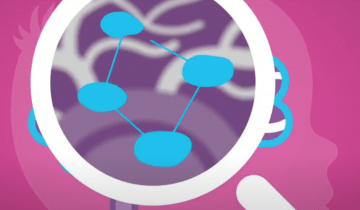
Dr. Nathalie Maitre discusses the CPF Early Detection and Intervention Network and helps us to understand how babies learn, how CP impacts the developing brain, and early intervention strategies that can help.
CPF Executive Director Rachel Byrne and psychologist Gili Segall, PhD discuss mental health during these constantly changing times and how to create strategies to help everyone in the family thrive.
CPF Executive Director Rachel Byrne and Christina Smallwood talk about parenting, raising a child with cerebral palsy and helping her learn to advocate for herself.
CPF Executive Director Rachel Byrne and Weinberg Cerebral Palsy Center social worker, Jan Moskowitz, discuss strategies for coping with anxiety and depression, especially during times of isolation.
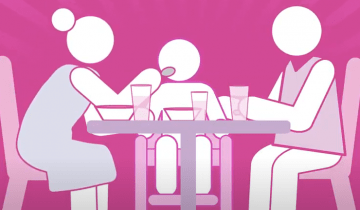
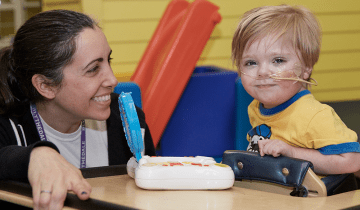
Good nutrition is critical for your child's healthy brain development. It's not uncommon for families to struggle getting enough food to eat. If you feel like you haven't had enough food to feed your whole family in the last month, please talk to someone. This is a common problem.
Adults with Cerebral Palsy have unique care needs related to physiological changes that occurred with growth and development with Cerebral Palsy, including mental health, yet experience many barriers to proper care.
Oropharyngeal dysphagia, or OPD, is an impairment of the oral or pharyngeal phases of the swallow. This can impair muscle movements and coordination of the mouth, such as the lips, tongue, jaw, cheeks, palate, and also muscles of the pharynx and the entry to the airway.
Cerebral palsy is caused by damage to the infant brain. This damage can involve not only the motor parts of the brain, but also the parts that deal with vision. This is not related to damage to the eye but is related to damage of the parts of the brain that process visual information.
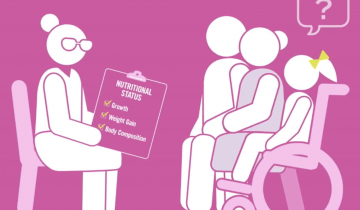
Weight, height and body composition are important indicators for development. The tools used to measure these can be different for children with cerebral palsy.
Children with cerebral palsy (CP) often grow poorly and assessment of growth in this population is further complicated by two main difficulties. Firstly, children may have joint contractures, muscular weakness, scoliosis, and/or involuntary movements that make standing or lying straight difficult, if not impossible.
When we have a physical disability, our bones can get a bit weak or osteoporotic. Something that can be improved is promoting bone health for people with cerebral palsy.
As a parent, when it comes to different types of interventions for infants with cerebral palsy, how do you know what you have, what you don't, and what you could get?