
Making informed decisions about care and treatment for cerebral palsy (CP) can be overwhelming, especially with the vast amount of medical research available. Through this guide, we aim to help you better understand the types of research you may encounter and provides practical tips for evaluating studies relevant to CP.

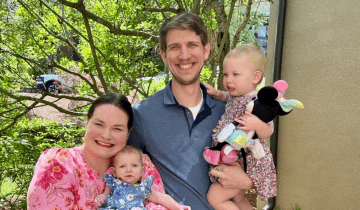
Welcome to That Mom With CP-a space created to celebrate and support mothers with cerebral palsy through shared stories, adaptive parenting tips, and honest conversations about self-care and disability.
For as long as I can remember, I dreamed of being a mama and for equally as long, I just couldn’t comprehend the dream coming true, for me. Yet, I had NO frame of reference or role models for mamas with CP.
Discover how living with cerebral palsy has made me a more patient, adaptable, and intentional mom—and why disability can be a strength, not a setback.
An honest, uplifting look at motherhood with CP — what I feared, what I learned, and how becoming a disabled mom became my greatest strength.
In Episode 4 of Coffee Talk, Nathalie and Jen discuss research and clinical trials.
In 10% to 15% of cases, there is no clear cause of CP. There is increasing recognition that genetics plays a part, but no standardized approach to genetic testing in patients with CP exists. In this study we asked the question whether both people with and without known risk factors for CP should have genetic testing.
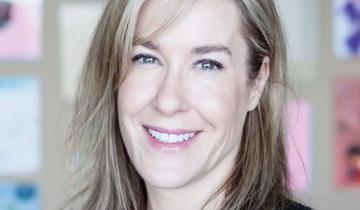
Living with CP taught Dr. Kathleen Friel much about educating others about her disability and now about her life threatening diagnosis of Metastatic Breast Cancer.
CPF Executive Director Rachel Byrne and Chris Modlesky, PhD discuss exercise, fitness, research, research funding and his current research.
Now you can receive a no-cost genetic test for you or your child sent directly to your home.
The purpose of this study is to explore the breast cancer screening experiences of women with CP with the aim of identifying factors that could improve screening rates for women with disabilities.
Breast cancer is a major cause of mortality in women. Screening has been known to improve early detection for early treatment. Women with disabilities face many physical and attitudinal barriers to mammogram screenings. This webinar has been created to address the educational needs of technologists and to give women with cp and disabilities visual accurate information about the procedure.
It’s SMART to think about what you might want to discuss at your next doctor’s appointment. Here are some suggestions
Cohort-based whole exome and whole genome sequencing and copy number variant (CNV) studies have identified genetic etiologies for a sizable proportion of patients with cerebral palsy (CP). These findings indicate that genetic mutations collectively comprise an important cause of CP.
CPF Executive Director Rachel Byrne and Jocelyn Cohen, Vice President of Communications and Engagement at Cerebral Palsy Alliance Research Foundation discuss collaboration in research.
Can there be a genetic cause of Cerebral Palsy in some cases? Let's Talk CP host, Cynthia Frisina talks with Dr. Michael Kruer about this topic and his ground-breaking research in Part 2 of a two-part discussion about the possible genetic causes of CP. When Michael Kruer was in medical school, he knew he wanted to work with children. With advancements in gene therapy opening up incredible opportunities in neuroscience, he realized he could be a part of something much bigger than himself and give children affected by movement disorders like cerebral palsy hope that didn’t seem possible just a few years ago.
If you're interested in learning more about what is involved with genetic testing and how a visit with a genetic counselor might be helpful, join Cynthia Frisina, the host of Let's Talk CP, as she dives deep with licensed genetic counselor, Danielle Lemke and they talk about what genetic counseling really is, how it can help and what it might be used for as it relates to potential genetic causes of cerebral palsy.
Can there be a genetic cause of Cerebral Palsy in some cases? Let's Talk CP host, Cynthia Frisina talks with Dr. Michael Kruer about this topic and his ground-breaking research in Part 1 of a two-part discussion about the possible genetic causes of CP. When Michael Kruer was in medical school, he knew he wanted to work with children. With advancements in gene therapy opening up incredible opportunities in neuroscience, he realized he could be a part of something much bigger than himself and give children affected by movement disorders like cerebral palsy hope that didn’t seem possible just a few years ago.
An international study recently published in the journal Nature Genetics has provided the first firm evidence that for a substantial number of people, their cerebral palsy (CP) may be caused by a genetic mutation, or mis-spelling in the body’s DNA blueprint.
"In addition to commonly associated environmental factors, genomic factors may cause cerebral palsy. We performed whole-exome sequencing of 250 parent–offspring trios, and observed enrichment of damaging de novo mutations in cerebral palsy cases."
This fact sheet is a sexual and reproductive health guideline for providers treating young women with cerebral palsy.
For women with Cerebral Palsy, self-advocacy is probably the most important part, but it's also probably the hardest part because most of those doctors have not encountered women with disabilities. You really have to tell them what you need and tell them what to expect.
When scheduling and preparing for an OB/GYN appointment, women with Cerebral Palsy have additional challenges to consider and address when both scheduling the appointment and once they go their appointment.
For women with Cerebral Palsy, finding a new OB/GYN can be difficult for a variety of reasons: accessibility (both to the building and in the exam rooms), staffing and supports for additional physical needs and more.
Up to 50% of adolescents with cerebral palsy have an intellectual disability, as well as a physical disability. Adolescents with intellectual disabilities still need sexual health education, they just need it in a way that's more individualized so that they can understand it and use it.