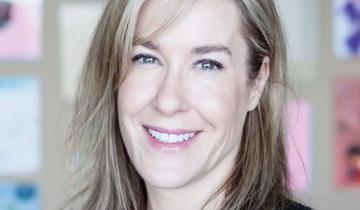
In my 30-year career as a social worker and therapist, I have seen many children, adults, couples and families face what seems impossible. There are some common characteristics with those who face impossible with fear and those who face it with hope.
For all of us, the idea of adjusting is so important in understanding ourselves, those around us and the kindness that can happen when offered with care and understanding.
The 2025 Accessible Holiday Gift Guide makes finding meaningful gifts easy, with adaptive and inclusive ideas for every celebration—because giving should be enjoyable all year round.
Eye movement desensitization and reprocessing (EMDR) therapy is a mental health treatment technique. This method involves moving your eyes a specific way while you process traumatic memories. EMDR's goal is to help you heal from trauma or other distressing life experiences.
On the days that having CP is challenging, it is extra important to take care of yourself, all those feelings and your body. When we can mention how we feel, then we figure out or manage what we need to feel better.
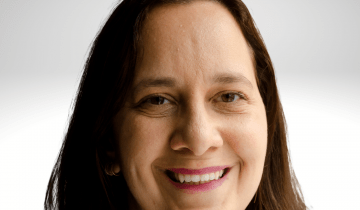
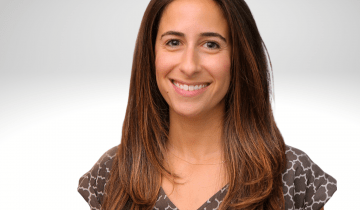
In this new series within Cerebral Palsy Health, Jen sits down with Nathalie Maitre, MD, PhD to talk about parenting, our shared experiences raising sons with CP and more!
If you are looking for a great gift for someone with cerebral palsy or a related disability, we’ve got you covered with our 2021 Accessible Gift Guide.
We’ve spent weeks picking out special gifts at a variety of price points for all ages and stages! Let our Accessible Gift Guide do the work for you, complete with the links to buy each gift directly. And we’re even more excited to let you know we’ve partnered with several of the awesome companies and products featured here for holiday gift giveaways in the days to come with our Holiday giveaway countdown.
The 2024 Accessible Holiday Gift Guide is a great place to find gifts, gadgets, gear, and more...not just for the holidays but for birthdays or any day you are looking for something special, all year round!
This presentation from the 2023 AACPDM Community Forum presents and overview of the interactions between the types of Cerebral Palsy, Mental and Behavioral Health and various medications and strategies to treat challenging mental health disturbances.
Our Accessible Holiday Gift Guide is a great place to find gifts, gadgets, gear, and more...not just for the holidays but for birthdays or any day you are looking for something special, all year round!
Speech impairments like dysarthria are common in children with cerebral palsy (CP) which can greatly affect participation across environments. Our study examined how speech impairment severity changes over time in 101 children with CP at 4, 6, 8, and 10 years of age.
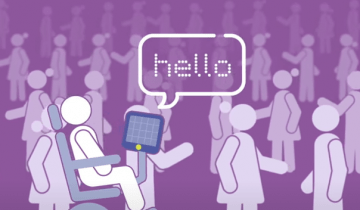
When a person is looking for a way to communicate in alternative ways, they need to find something that really works for them. They need to try to find a voice that sounds natural. They want to try to find a way to be efficient. They want to be able to communicate as normally as possible, even though they're not using their biological voice.
Dysarthria is a motor speech disorder that affects how clear and understandable a person’s speech is. Between 50-90% of people with CP have dysarthria.
Our Accessible Holiday Gift Guide is a great place to find gifts, gadgets, gear, and more...not just for the holidays but for birthdays or any day you are looking for something special, all year round!
CPF Executive Director Rachel Byrne and psychologist Gili Segall, PhD discuss mental health during these constantly changing times and how to create strategies to help everyone in the family thrive.
CPF Executive Director Rachel Byrne and Weinberg Cerebral Palsy Center social worker, Jan Moskowitz, discuss strategies for coping with anxiety and depression, especially during times of isolation.
Adults with Cerebral Palsy have unique care needs related to physiological changes that occurred with growth and development with Cerebral Palsy, including mental health, yet experience many barriers to proper care.
We’ve spent weeks picking out special gifts at a variety of price points for all ages and stages! Let our Accessible Gift Guide do the work for you, complete with the links to buy each gift directly. And we’re even more excited to let you know we’ve partnered with several of the awesome companies and products featured here for holiday gift giveaways in the days to come with our Holiday giveaway countdown.
Communication isn't just about building words. It's about making an effort so that the student has that self-confidence to be a good communicator, so that we have that one-on-one partnership of communication.
We all have different towns and we all have different things that we do in the course of the day. It may be that the student is a great artist or a great writer. When it comes to assistive technology we have to think about what is going to give that student the ability to do what they love without having to see roadblocks and go, "I can't do that”. There are so many tools out there, whether it's a communication app, a video app, a math tool. With assistive technology you are not making the student into what you want them to be.
When you use alternate means of communication it can be really frustrating to go out in community. It is hard to know whether people are understanding you and whether they will take the time to listen. A lot of times it's hard for people to admit that they're not always comfortable with a device or a wheelchair or person who does things differently. So the more we can expose and educate people the better off we all will be. When we talk about acceptance, we're not just talking about people in society accepting people with disabilities. We're also talking about people with disabilities who are using alternate means of communication and how difficult it is for them to be out in the community.