Researchers studied the natural history of cerebral visual impairment (CVI) in children with cerebral palsy (CP) and identify which early visual signs or symptoms are associated with cognitive visual disorders (CVDs) at school age.
MEVU was initially developed for children with cerebral palsy. It is now being tested with a wider group of parents and caregivers. You can help by taking the MEVU Survey today!
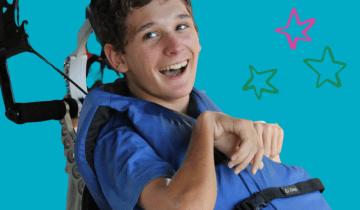
Our son was diagnosed with complex quadriplegic cerebral palsy at six months old. At the same time, we began to notice that he was struggling with vision. With persistence we found the right diagnosis and support.
In this special episode from the AACPDM annual meeting, Belinda Deramore Denver talks about vision in CP and her current work to better understand how children use their vision to help intervene early and with the right interventions.
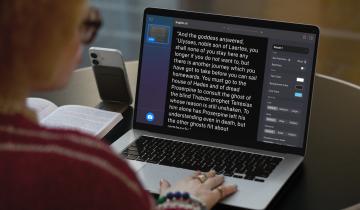
Technology for people with disabilities is advancing at an unprecedented pace, with artificial intelligence (AI), machine learning, and mainstream tech giants leading the way in accessibility innovation. Here’s a look at the most exciting developments, highlighting recent announcements from Apple, Microsoft, and the growing impact of AI-based solutions.
Creating opportunities that enable play in order to combat social isolation, foster inclusive communities, and improve the quality of life for people with disabilities.
Cephable is a free software for individuals that adapts to the user, enabling technology control through voice, face, and motion for a more accessible digital experience.
Founded by Susan Banks and Courtney Craven, Can I Play that? (CIPT) has grown from a hobby site to a destination for gamers and developers alike that provides all forms of accessibility information on video games and the industry.
This study tested the safety and effectiveness of a neuroscience-based, multi-component intervention designed to improve motor skills and sensory processing of the more-affected arm and hand in infants with CP where one side is more impacted than the other (asymmetric CP).
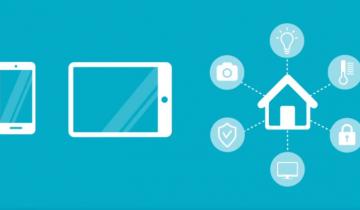
Assistive technology comes in all shapes and sizes to help adapt your environment to best meet your needs. From tools to help you turn on the lights to high tech games to help you participate with your peers, AT can equalize the playing field!
Dr. Nathalie Maitre discusses the CPF Early Detection and Intervention Network and helps us to understand how babies learn, how CP impacts the developing brain, and early intervention strategies that can help.
CPF Executive Director Rachel Byrne and Christina Smallwood talk about parenting, raising a child with cerebral palsy and helping her learn to advocate for herself.
We rely on assistive technology for everything from holding utensils better to using a complex communication device. Makers Making Change is helping to create both custom and affordable assistive tech for all abilities and needs.
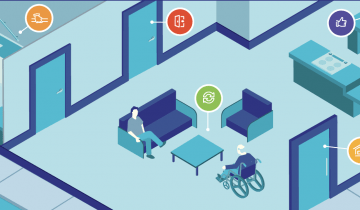
As an undergraduate student in a major metropolitan city like NYC, the thought of finding a place to live after graduation was very daunting. I didn’t have many options for accessible dorms on campus, so I could only wonder how much more difficult it’d be to find a “real-life adult” apartment that I could afford as a 20-something-year-old. My apartment search began one year earlier than
The historic Americans with Disabilities Act (ADA) was signed into law on July 26, 1990, by President George H.W. Bush — marking this month its 30th anniversary. The ADA was the country’s first-ever comprehensive civil rights law for people with disabilities, offering protection against discrimination and imposing accessibility requirements in workplaces and the public. The passage of this law was
Cerebral palsy is caused by damage to the infant brain. This damage can involve not only the motor parts of the brain, but also the parts that deal with vision. This is not related to damage to the eye but is related to damage of the parts of the brain that process visual information.
It would be an understatement to say that the last few weeks have been unprecedentedly difficult. Some of you might feel hopeless, some fearful, and some defeated. However, it’s times like this that we must muster up our strength and forge forward.