Learn more about the many adaptive recreational and competitive sports for individuals with cerebral palsy.

If you or your child have cerebral palsy where the cause is unclear, there are no-cost genetic tests and no-cost genetic counseling that can help answer some of these questions.

This study tested the safety and effectiveness of a neuroscience-based, multi-component intervention designed to improve motor skills and sensory processing of the more-affected arm and hand in infants with CP where one side is more impacted than the other (asymmetric CP).

This comprehensive review of the research evidence surrounding supportive stepping for individuals, GMFCS IV and V, provides helpful information for families to make practical decisions about for whom, when, and how long to use a supported stepping device (also known as gait trainers).
This comprehensive review of the research evidence surrounding supportive standing for individuals, GMFCS IV and V, provides helpful information for families to make practical decisions about for whom, when, and how long to use a standing device.
Speech impairments like dysarthria are common in children with cerebral palsy (CP) which can greatly affect participation across environments. Our study examined how speech impairment severity changes over time in 101 children with CP at 4, 6, 8, and 10 years of age.
Too often, people with disabilities are relegated to being passive when it comes to the arts.

When a person is looking for a way to communicate in alternative ways, they need to find something that really works for them. They need to try to find a voice that sounds natural. They want to try to find a way to be efficient. They want to be able to communicate as normally as possible, even though they're not using their biological voice.
Assistive technology comes in all shapes and sizes to help adapt your environment to best meet your needs. From tools to help you turn on the lights to high tech games to help you participate with your peers, AT can equalize the playing field!

Researchers at the National Institutes of Health (NIH) are studying the motor skills and brain development of infants who are at high-risk for Cerebral Palsy (CP). Results may assist with better treatment methods for CP.
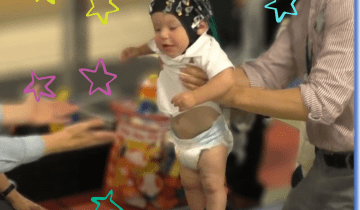
Jerron Herman, dancer, actor, trainer and more describes how he moves with spastic hemiplegia...and it might just surprise you!

Transcript of Ava's Patient Story at Gillette
Transcript of Cerebral Palsy Health Episode 10 with Dr. Natalie Maitre, neonatologist and researcher about early detection and intervention.
Dr. Nathalie Maitre discusses the CPF Early Detection and Intervention Network and helps us to understand how babies learn, how CP impacts the developing brain, and early intervention strategies that can help.

Author summary on stakeholder perspectives of pediatric powered wheelchair standing devices.
Researchers are looking for babies with motor delays and their families to participate in an NIH funded research project to evaluate possible benefits of two interventions for babies targeting sitting and reaching. Does your child qualify? Find out now!
The bipartisan, Cerebral Palsy Research Act, is introduced by Congressman Steve Cohen of Tennessee. Read more here:

Dr. Tom Novacheck, of Gillette Children's, describes the characteristics of the 4 types of unilateral, otherwise known as hemiplegic gait, and how the use of clinical instrumented gait analysis can help with treatment decision making.
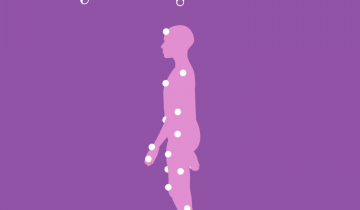
Dr. Tom Novacheck, Gillette Children's, describes what to look for in each of the 4 different gait patterns seen for those with bilateral cerebral palsy and considerations for each type.