Researchers studied the natural history of cerebral visual impairment (CVI) in children with cerebral palsy (CP) and identify which early visual signs or symptoms are associated with cognitive visual disorders (CVDs) at school age.
MEVU was initially developed for children with cerebral palsy. It is now being tested with a wider group of parents and caregivers. You can help by taking the MEVU Survey today!
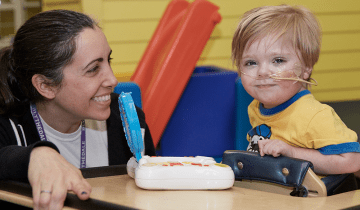
Our son was diagnosed with complex quadriplegic cerebral palsy at six months old. At the same time, we began to notice that he was struggling with vision. With persistence we found the right diagnosis and support.
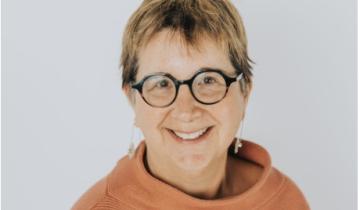
In this special episode from the AACPDM annual meeting, Belinda Deramore Denver talks about vision in CP and her current work to better understand how children use their vision to help intervene early and with the right interventions.
Making informed decisions about care and treatment for cerebral palsy (CP) can be overwhelming, especially with the vast amount of medical research available. Through this guide, we aim to help you better understand the types of research you may encounter and provides practical tips for evaluating studies relevant to CP.
This study tested the safety and effectiveness of a neuroscience-based, multi-component intervention designed to improve motor skills and sensory processing of the more-affected arm and hand in infants with CP where one side is more impacted than the other (asymmetric CP).
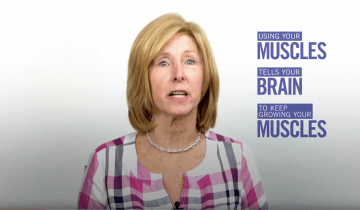
Dr. Nathalie Maitre discusses the CPF Early Detection and Intervention Network and helps us to understand how babies learn, how CP impacts the developing brain, and early intervention strategies that can help.
CPF Executive Director Rachel Byrne and Christina Smallwood talk about parenting, raising a child with cerebral palsy and helping her learn to advocate for herself.
CPF Executive Director Rachel Byrne and Jocelyn Cohen, Vice President of Communications and Engagement at Cerebral Palsy Alliance Research Foundation discuss collaboration in research.
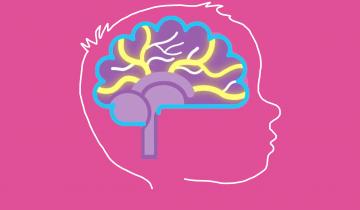
Cerebral palsy is caused by damage to the infant brain. This damage can involve not only the motor parts of the brain, but also the parts that deal with vision. This is not related to damage to the eye but is related to damage of the parts of the brain that process visual information.
As a parent, when it comes to different types of interventions for infants with cerebral palsy, how do you know what you have, what you don't, and what you could get?
Exploration for an infant means discovering anything about that environment. If that infant needs an opportunity to be brought to them, that's okay. Let an infant explore through their senses, whether it's touch, or smell, or taste, or sight, or hearing.
Babies develop about 80% of their brain growth over the first two years of life, and it's also when all the connections in the brain, what we call the white matter, which is the cables in the brain, grow and develop and connect to the cortex.
It has been scientifically proven that enriched environment can help children with CP gain new skills in their movement but also their thinking and communication skills.