Researchers studied the natural history of cerebral visual impairment (CVI) in children with cerebral palsy (CP) and identify which early visual signs or symptoms are associated with cognitive visual disorders (CVDs) at school age.
MEVU was initially developed for children with cerebral palsy. It is now being tested with a wider group of parents and caregivers. You can help by taking the MEVU Survey today!
Our son was diagnosed with complex quadriplegic cerebral palsy at six months old. At the same time, we began to notice that he was struggling with vision. With persistence we found the right diagnosis and support.
In this special episode from the AACPDM annual meeting, Belinda Deramore Denver talks about vision in CP and her current work to better understand how children use their vision to help intervene early and with the right interventions.
CP describes a spectrum of conditions that affects individuals in many different ways. Your care team may use the term GMFCS which stands for Gross Motor Function Classification Scale and is used to describe what mobility aids your child may need to complete certain tasks.
Welcome to That Mom With CP-a space created to celebrate and support mothers with cerebral palsy through shared stories, adaptive parenting tips, and honest conversations about self-care and disability.
For as long as I can remember, I dreamed of being a mama and for equally as long, I just couldn’t comprehend the dream coming true, for me. Yet, I had NO frame of reference or role models for mamas with CP.
Discover how living with cerebral palsy has made me a more patient, adaptable, and intentional mom—and why disability can be a strength, not a setback.
Parálisis Cerebral Respuestas (Cerebral Palsy Answers) is a podcast in Spanish, that seeks to answer all your questions about Cerebral Palsy! Join me every week for in-depth interviews with top specialists in Cerebral Palsy and individuals living with Cerebral Palsy to get the answers!
In cerebral palsy (CP) muscles are often shortened so much that they restrict joint range of motion and the muscles themselves are weak. Thus, ‘shortness’ and ‘weakness’ are two important needs that clinicians must address.
The American Academy of Pediatrics has updated its recommendations for Primary Care Providers to provide a "Medical Home" for children and youth with cerebral palsy. This comprehensive update gives primary care pediatricians the guidance they need to address the many needs that children and youth with CP experience and coordinate care across disciplines. The Cerebral Palsy Foundation has created a checklist to help guide you in raising your child with CP to living the healthiest life possible and ensure that you and your pediatrician are addressing all of your concerns.
Living with CP taught Dr. Kathleen Friel much about educating others about her disability and now about her life threatening diagnosis of Metastatic Breast Cancer.
Plain Language Summaries are an excellent way to get a clear overview of clinical research. Our friends with Mac Keith Press and the AACPDM Community Council have worked together to choose articles that might be right for you.
The purpose of this study is to explore the breast cancer screening experiences of women with CP with the aim of identifying factors that could improve screening rates for women with disabilities.
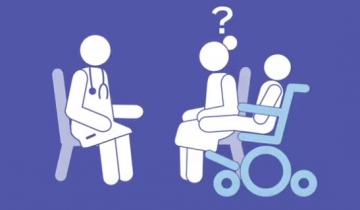
Breast cancer is a major cause of mortality in women. Screening has been known to improve early detection for early treatment. Women with disabilities face many physical and attitudinal barriers to mammogram screenings. This webinar has been created to address the educational needs of technologists and to give women with cp and disabilities visual accurate information about the procedure.
CPF Executive Director Rachel Byrne and Peter Rosenbaum, MD, developmental pediatrician and CPF Scientific Advisory Council member discuss how current thinking about Cerebral Palsy has changed over time with advances in research.
Understanding and managing healthcare and the healthcare system can be daunting for all of us. Attitudes of both providers and patients toward healthcare have experienced significant changes over the past few decades, shifting away from a focus on providers addressing problems as they arise, to more of a partnership and a shared decision-making process to maximize function, well-being, and reduce potential morbidities [1].
On this episode with Dr. Amy Bailes, we discuss the Gross Motor Functional Classification System (the GMFCS), the Gross Motor Functional Measure (the GMFM), and the corresponding motor curves. The GMFCS is an important classification system that is relatively easy to understand and it helps create a shared language and framework for understanding a person with CP’s physical function. This can be very helpful for patients, families and providers of all sorts, especially as it relates to both and acceptance and understanding of the diagnosis and family-centered shared decision making.
Welcome! The Cerebral Palsy Foundation is connecting the Cerebral Palsy community one podcast at a time with “Let’s Talk CP” - the new podcast series bringing you education, conversation, support and much more on a variety of topics. Join Jason Benetti, White Sox and ESPN sports announcer, and friends, as we get real with families, clinicians and researchers asking the questions you want to know about your CP journey. We’re all in this together.