
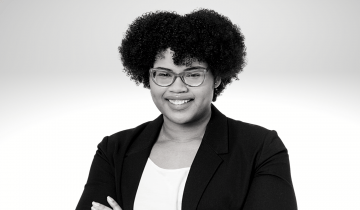
CPF Executive Director Rachel Byrne and Minnelly Vasquez, a social worker at the Weinberg Family Cerebral Palsy Center, discuss cerebral palsy and mental health, along with opportunities for specific services.
CPF Executive Director Rachel Byrne and Minnelly Vasquez, Licensed Clinical Social Worker with the Weinberg Cerebral Palsy Center at Columbia University Irving Medical Center, discuss mental health care for individuals with cerebral palsy and caregivers.
Our 3rd Virtual Town Hall highlighting the latest updates in care of children with Cerebral Palsy with experts from the Shirley Ryan Ability Lab and Northwestern University.
A continuation of our educational series with experts from Scottish Rite for Children and the University of Texas Southwestern Medical Center.
A multi-disciplinary panel with experts from Rady Children's Hospital, Southern Family CP Center, and UC San Diego School of Medicine discussing the newest updates in care of children with Cerebral Palsy.
Bimanual therapy uses principles of motor learning, focusing on simultaneous use of both hands, to restore upper limb function in patients with motor deficits. The purpose of this review article is to consolidate research within the past 15 years on bimanual therapy for children (aged 8 months - 18 years) with hemiplegia. This review will update and summarize findings of clinical studies with respect to important factors of the patient population (those who stand to benefit most), treatment characteristics (best practices), and outcomes of intensive bimanual training (changes in neurophysiology and measures of ability).

Bimanual therapy, also referred to as intensive bimanual training, engages patients in active play or practice to improve the use and coordination of both hands. Bimanual therapy is different from similar unimanual therapies, like constraint-induced movement therapy (CIMT), because it promotes simultaneous use of both hands.
Transcript of CPF LIVE with Gili Segall, psychologist at NYU Langone Child Study Center
Transcript of CPF LIVE with Christina Smallwood and CPF Executive Director Rachel Byrne, talking about parenting, therapy, siblings and more.
CPF Executive Director Rachel Byrne and psychologist Gili Segall, PhD discuss mental health during these constantly changing times and how to create strategies to help everyone in the family thrive.
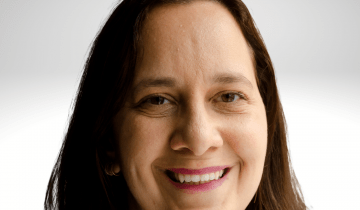
CPF Executive Director Rachel Byrne and Christina Smallwood talk about parenting, raising a child with cerebral palsy and helping her learn to advocate for herself.

This study highlights caregiver knowledge and preferences to understanding the GMFCS and how that information should be relayed from clinicians.
Transcript of CPF LIVE! with researcher Christopher Modlesky and CPF executive director Rachel Byrne.
Transcript of CPF LIVE! OT at Home with Lorene Janowski and Rachel Byrne.
The GMFCS, MACS and CFCS are all tools used by therapists and researchers to help classify the functional capabilities of individuals with CP. This research article provides evidence of their stability over time.
The GMFCS can be a helpful tool in clinical and research use and has been shown to be stable and accurate over time. It can also help individuals and families better understand cerebral palsy.
Transcript of CPF LIVE! with Jason Benetti, ESPN Play by Play announcer and CPF executive director Rachel Byrne about his life experience with CP.
Transcript of CPF Live! CPF Executive Director Rachel Byrne and Mary Gannotti, PhD, PT, discuss pain across the lifespan in cerebral palsy.
Transcript of CPF LIVE! CPF executive director Rachel Byrne talks with author Lily Collison and her son Tommy about their journey with Cerebral Palsy, Lily's book, Spastic Diplegia, Tommy's work, and much more.
CPF Executive Director Rachel Byrne and Peter Trojic, professional dancer with the Heidi Latski dance Company in New York City, discuss dance and disability.
Transcript of CPF Live! CPF executive director Rachel Byrne talks with physical therapist Jennifer Jezequel about exercise and fitness for children with Cerebral Palsy.
CPF Executive Director Rachel Byrne and Jason Benetti talk about his hard work, misperceptions, resilience, and his experience with cerebral palsy.
Transcript of CPF LIVE! with Xian Horn and CPF executive director Rachel Byrne discussing disability and breaking down stereotypes.
Transcript of CPF Live! CPF executive director Rachel Byrne talks with speech pathologist and researcher Kristen Allison about speech and cerebral palsy.