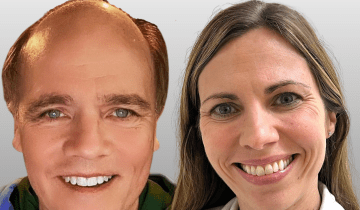
In this episode with Drs. Verena Schreiber and Hank Chambers, Jen discusses the preparations necessary to help ensure ensure a successful orthopedic surgery and a positive outcome.
Preparing those with CP for orthopaedic surgery is an important step to ensure the best outcomes. The following research review highlights important steps and considerations.
In LITTLE BEAR SEES you will learn: Exactly what CVI is What common characteristics to look for to determine if your child has CVI How the eyes and brain work together to facilitate vision Strategies and ideas for helping your child learn to see from the leading experts in cortical visual impairment
Whether you are a caregiver or an individual with CP, the decision to pursue a treatment or therapy can be daunting. Use this guide to help you sort through the hype and determine what might help.
Chris achieved and accomplished things that nobody thought were attainable. He persevered through cerebral palsy and learned that God had a purpose for him.
Written for fifth and sixth graders, this is the third in a series about Melody, now a teenager with cerebral palsy who utilizes a communication device to interact and participate. She is on her way to London!
Misty Campbell is parent of child with complex disabilities who wrote this book as a guide for other families to advocate for their own children with significant disabilities.
The Research Works podcast is designed for health professionals in the area of child health, where we discuss emerging, modern, evidence based research.
Intervention to improve function for children and young people with cerebral palsy needs to include client-chosen goals and whole-task practice of goals. Clinicians should consider child/family preferences, age, and ability when selecting specific interventions.
Speech impairments like dysarthria are common in children with cerebral palsy (CP) which can greatly affect participation across environments. Our study examined how speech impairment severity changes over time in 101 children with CP at 4, 6, 8, and 10 years of age.
When a person is looking for a way to communicate in alternative ways, they need to find something that really works for them. They need to try to find a voice that sounds natural. They want to try to find a way to be efficient. They want to be able to communicate as normally as possible, even though they're not using their biological voice.