The 2025 Accessible Holiday Gift Guide makes finding meaningful gifts easy, with adaptive and inclusive ideas for every celebration—because giving should be enjoyable all year round.
This research studied falls in ambulatory children and adults with CP specifically asking how often they’ve fallen, fall-related injuries experienced, circumstances around the fall, the level of fear or concern about future falls, and the extent to which they do or don’t avoid certain activities due to their concern about falling. This study sets a strong foundation for future fall research, quantifying the breadth and depth of the problem across a large spectrum of age and walking ability.
If you are looking for a great gift for someone with cerebral palsy or a related disability, we’ve got you covered with our 2021 Accessible Gift Guide.
We’ve spent weeks picking out special gifts at a variety of price points for all ages and stages! Let our Accessible Gift Guide do the work for you, complete with the links to buy each gift directly. And we’re even more excited to let you know we’ve partnered with several of the awesome companies and products featured here for holiday gift giveaways in the days to come with our Holiday giveaway countdown.
The 2024 Accessible Holiday Gift Guide is a great place to find gifts, gadgets, gear, and more...not just for the holidays but for birthdays or any day you are looking for something special, all year round!
Our Accessible Holiday Gift Guide is a great place to find gifts, gadgets, gear, and more...not just for the holidays but for birthdays or any day you are looking for something special, all year round!
If you or your child have cerebral palsy where the cause is unclear, there are no-cost genetic tests and no-cost genetic counseling that can help answer some of these questions.
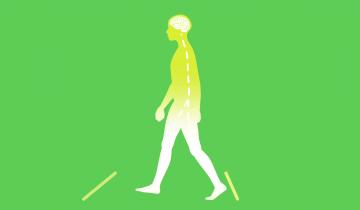
Dr. Tom Novacheck, of Gillette Children's, describes the characteristics of the 4 types of unilateral, otherwise known as hemiplegic gait, and how the use of clinical instrumented gait analysis can help with treatment decision making.
Dr. Tom Novacheck, Gillette Children's, describes what to look for in each of the 4 different gait patterns seen for those with bilateral cerebral palsy and considerations for each type.
Our Accessible Holiday Gift Guide is a great place to find gifts, gadgets, gear, and more...not just for the holidays but for birthdays or any day you are looking for something special, all year round!
The GMFCS, MACS and CFCS are all tools used by therapists and researchers to help classify the functional capabilities of individuals with CP. This research article provides evidence of their stability over time.
The GMFCS can be a helpful tool in clinical and research use and has been shown to be stable and accurate over time. It can also help individuals and families better understand cerebral palsy.
In this 2022 episode of "Let's Talk CP" host Jen Lyman talks with neurosurgeon, Dr. Debbie Song, and physiatrist, Dr. Marcie Ward about their role in the care of Cerebral Palsy at Gillette Children's.
In this new 2022 episode of "Let's Talk CP" host Cynthia Frisina talks with Dr. Tom Novacheck and Dr. Andrew Georgiadis from Gillette Children's about gait, gait analysis, and what makes Gillette Children's such a special place.
What do you do when you want to help your child but your local providers don't have the resources? You travel for treatment. In this personal story, Sophia's family describes their experiences traveling to Gillette Children's for treatment, including both neurosurgical and orthopedic surgeries.
We’ve spent weeks picking out special gifts at a variety of price points for all ages and stages! Let our Accessible Gift Guide do the work for you, complete with the links to buy each gift directly. And we’re even more excited to let you know we’ve partnered with several of the awesome companies and products featured here for holiday gift giveaways in the days to come with our Holiday giveaway countdown.
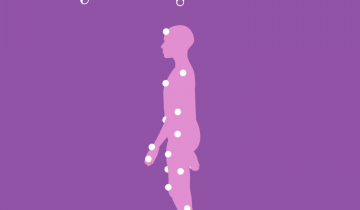
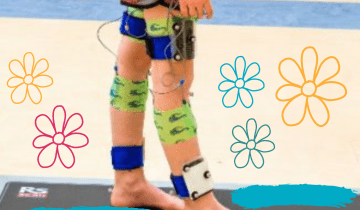
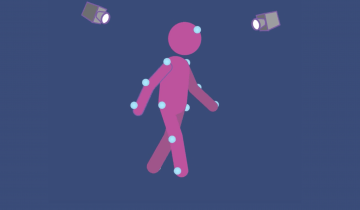
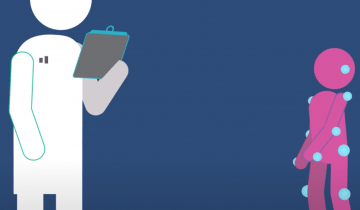
It's really hard just to watch someone walk to decide what's wrong with them. A better way is to do what's called Three Dimensional Gait Analysis, and that's where the child comes into one of our labs. Here, we put markers on their face, hands, and legs. We have a computer and a bunch of cameras all around the room. And then we're able to break down the gait into three dimensions.