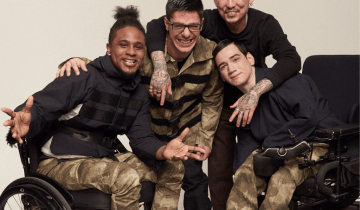
People who have dyskinetic cerebral palsy experience involuntary movements that are difficult to control. These movements can be slow, twisting and writhing, or rapid and jerky, and can impact movement in the hands, arms, feet, legs and even the face or tongue.
Do you or your child have movements that are difficult to control? Is your mobility and function impacted by abnormal movements and cause pain? If so, you or your child may have Dyskinesia. If you want to learn more, including how it is treated, please join us on for a new educational Town Hall with experts Dr. Susan Biffl, from Rady Children's Hospital, and Dr. Mark Gormley, from Gillette Children's.
Are you wondering how spasticity impacts movement, mobility and function? What tools do physicians have in their tool box to treat spasticity and how do can you help to maximize the impact of these treatments? This virtual event covers it all featuring two of the leading experts in Spasticity and Spasticity Management.
The American Academy of Pediatrics has updated its recommendations for Primary Care Providers to provide a "Medical Home" for children and youth with cerebral palsy. This comprehensive update gives primary care pediatricians the guidance they need to address the many needs that children and youth with CP experience and coordinate care across disciplines. The Cerebral Palsy Foundation has created a checklist to help guide you in raising your child with CP to living the healthiest life possible and ensure that you and your pediatrician are addressing all of your concerns.
Living With Cerebral Palsy by Paul Pimm describes the varying effects of cerebral palsy, how different people manage to live with this condition, and where to get more information.
Bimanual therapy, also referred to as intensive bimanual training, engages patients in active play or practice to improve the use and coordination of both hands. Bimanual therapy is different from similar unimanual therapies, like constraint-induced movement therapy (CIMT), because it promotes simultaneous use of both hands.
The GMFCS, MACS and CFCS are all tools used by therapists and researchers to help classify the functional capabilities of individuals with CP. This research article provides evidence of their stability over time.
The GMFCS can be a helpful tool in clinical and research use and has been shown to be stable and accurate over time. It can also help individuals and families better understand cerebral palsy.
In this 2022 episode of "Let's Talk CP" host Jen Lyman talks with neurosurgeon, Dr. Debbie Song, and physiatrist, Dr. Marcie Ward about their role in the care of Cerebral Palsy at Gillette Children's.
Adults with Cerebral Palsy have unique care needs related to physiological changes that occurred with growth and development with Cerebral Palsy, including mental health, yet experience many barriers to proper care.
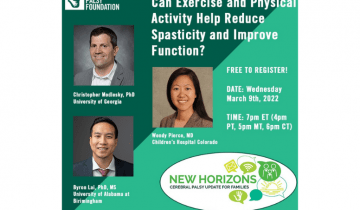
Our educational series continues with this virtual event featuring a multi-disciplinary panel discussion on exercise and physical activity and its impacts on spasticity and function.
A lot of people with cerebral palsy will experience pain over the course of their life. Through better assessment we can provide better interventions, which will lead to a better quality of life.
The Cerebral Palsy Foundation has created a factsheet to help guide you in understanding and treating pain with CP. This fact sheet has been created for individuals with cerebral palsy to provide basic guidance surrounding common causes and potential treatment of pain.
The Cerebral Palsy Foundation has created a checklist to help guide you in living the healthiest life possible. This checklist has been created for adults with cerebral palsy to provide basic guidance surrounding routine and additional screenings that should occur as part of your primary and preventive care.
The purpose of this study is to explore the breast cancer screening experiences of women with CP with the aim of identifying factors that could improve screening rates for women with disabilities.
Adults with Cerebral Palsy have unique care needs related to physiological changes that occurred with growth and development with Cerebral Palsy, including mental health, yet experience many barriers to proper care.
Though the initial insult or injury to the brain that causes cerebral palsy is non-progressive, aging with cerebral palsy and lack of physical activity during critical periods of development can impact biologic and metabolic function for adults with cerebral palsy.