Nuestros discusiones educacionales continuó con un grupo de expertos el Jueves 25 de Marzo 2021. Este evento virtual contó con un panel de discusion multidisciplinario.
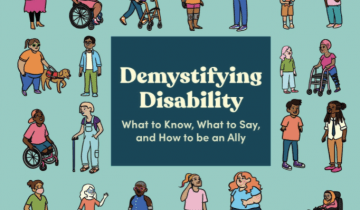
An approachable guide to being a thoughtful, informed ally to disabled people, with actionable steps for what to say and do (and what not to do) and how you can help make the world a more accessible, inclusive place.
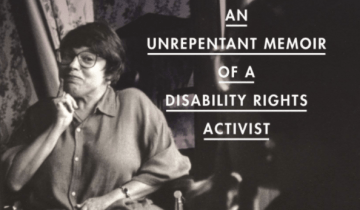
Judy Heumann’s candid, intimate, and irreverent memoir about resistance to exclusion, invites readers to imagine and make real a world in which we all belong.
Written by cerebral palsy specialists, Drs. Peter Rosenbaum and Lewis Rosenbloom, this book gives a comprehensive, yet accessible and readable overview of cerebral palsy across the lifespan.
Written for fifth and sixth graders, this is the story of a young girl with cerebral palsy who utilizes a communication device to interact and participate.
Comedian Zach Anner opens his frank and devilishly funny book, If at Birth You Don't Succeed, with an admission: he botched his own birth. Two months early, underweight and under-prepared for life, he entered the world with cerebral palsy and an uncertain future.
Written for both clinicians and families, this comprehensive guide to complex cerebral palsy utilizes the ICF to organize and guide the subject matter in order to assist both clinicians and families to maximize participation for those who are impacted more significantly by cerebral palsy.
For three editions now, a team of experts associated with the Cerebral Palsy Program at the Alfred I. duPont Hospital for Children have shared vital information through this authoritative resource for parents, who will turn to it time and time again as their child grows.
On this episode I talk with two of the world’s leading researchers… Dr. Madison Paton and Dr. Iona Novak on stem cell treatment for cerebral palsy. Stem Cells have been a hot topic in Cerebral Palsy for at least 15 years now, with many parents and researchers hoping that at the least, stem cells will lessen the impact of CP and at most hold the key to a cure. Dr. Paton and Dr. Novak will share their insider knowledge into this subject and help us sort through the hype and so we can hold onto our hope.
Our educational series continued with a panel of experts from Nationwide Children's Hospital on Monday, March 29th, 2021. This virtual event featured a multi-disciplinary panel discussion.
Our educational series continued with a panel of experts from Scottish Rite for Children and the University of Texas Southwestern Medical Center on Thursday, March 25th, 2021. This virtual event featured a multi-disciplinary panel discussion.
Our 3rd Virtual Town Hall featured experts from the Shirley Ryan Ability Lab and Northwestern University in Chicago. This multi-disciplinary panel discussion highlights the latest updates in care of children with #CerebralPalsy.
The second Virtual Town Hall featured the experts from Rady Children's Hospital, Southern Family CP Center, and UC San Diego School of Medicine in San Diego, California. This multi-disciplinary panel discussion highlights the latest updates in care of children with CerebralPalsy.
Our educational series kicked off with a panel of experts from the Weinberg Family CP Center at Columbia University Irving Medical Center in New York City on Thursday, November 5th, 2020 at 6:30pm ET. This virtual event featured a multi-disciplinary panel discussion with Weinberg Family CP Center clinicians and researchers.
As a mother and a pediatrician, I’ve both felt the strain of pandemic parenting directly and indirectly. I’ve made decisions about my own family and sending our kids to daycare and school, and I’ve stayed up worrying about how parents are supposed to make these difficult choices with so little support.
Purpose of review: Cerebral palsy is the most common physical disability of childhood, but the rate is falling, and severity is lessening. We conducted a systematic overview of best available evidence (2012-2019), appraising evidence using GRADE and the Evidence Alert Traffic Light System and then aggregated the new findings with our previous 2013 findings. This article summarizes the best available evidence interventions for preventing and managing cerebral palsy in 2019.
Wondering what to expect if your child has an appointment with a pediatric orthopedic surgeon? Still confused about the different types and levels of cerebral palsy? Dr. Hank Chambers, who is also the father of an adult son with CP, talks about different considerations for different ages and stages of a child with cerebral palsy.
Preparing yourself and your child well for medical appointments means a better experience for everyone. Our “Let’s Talk CP” podcast series continues Cerebral Palsy Foundation host, Cynthia Frisina talking with Physiatrist Dr. Lisa Thornton about cerebral palsy, spasticity and what to expect at many kinds of medical appointments. Questions include what to expect when procedures like botulinum toxin injections are recommended, how to talk with a clinician when “little ears” are listening, and much more. This episode is made possible with the support of Ipsen Biopharmaceuticals.
Spasticity is usually caused by central nervous system injuries, such as brain injuries or spinal cord injuries. Spasticity is a little different from stiffness.
When treating a child with CP, part of a pediatrician’s job is assessing and treating children with abnormal tone difficulties, as well as other muscular-skeletal problems. From around the age of two years, kids start to develop difficulties with muscle tone that can have an impact on their hip development.
Cerebral palsy is a damage to the developing brain in the motor part of the brain. Individuals with cerebral palsy have problems with weakness and sometimes also involuntary movements.