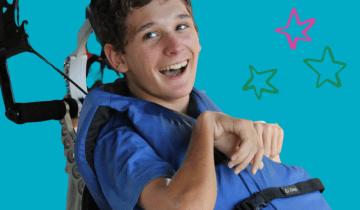
MEVU was initially developed for children with cerebral palsy. It is now being tested with a wider group of parents and caregivers. You can help by taking the MEVU Survey today!
Our son was diagnosed with complex quadriplegic cerebral palsy at six months old. At the same time, we began to notice that he was struggling with vision. With persistence we found the right diagnosis and support.
In this special episode from the AACPDM annual meeting, Belinda Deramore Denver talks about vision in CP and her current work to better understand how children use their vision to help intervene early and with the right interventions.
United Spinal Association has developed a comprehensive air travel guide for wheelchair users or anyone with mobility issues to assist with everything from traveling with your wheelchair to what to do if things break.
This research studied falls in ambulatory children and adults with CP specifically asking how often they’ve fallen, fall-related injuries experienced, circumstances around the fall, the level of fear or concern about future falls, and the extent to which they do or don’t avoid certain activities due to their concern about falling. This study sets a strong foundation for future fall research, quantifying the breadth and depth of the problem across a large spectrum of age and walking ability.
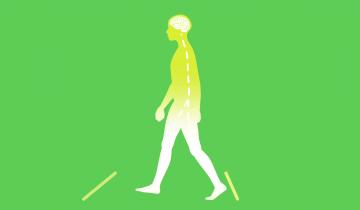
Dr. Tom Novacheck, of Gillette Children's, describes the characteristics of the 4 types of unilateral, otherwise known as hemiplegic gait, and how the use of clinical instrumented gait analysis can help with treatment decision making.
Dr. Tom Novacheck, Gillette Children's, describes what to look for in each of the 4 different gait patterns seen for those with bilateral cerebral palsy and considerations for each type.
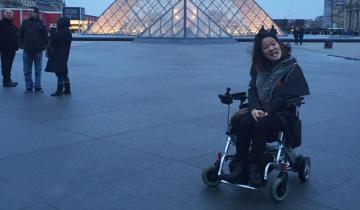
Welcome to the second part of my travel series! In the previous post, I wrote about how I found my love for traveling through my trip to Madrid and Paris. Looking back, not only do I realize that these trips took place during very different phases of my adult life, but they also mark the different phases of my CP in recent years. Although CP is the result of a non-progressive brain injury, many folks experience a decline in their physical abilities in their adult years — the inevitable effect of aging, not just for those with disabilities, but for everyone.
In the next couple of blog posts, I’ll write about some of my favorite trips that I took over the years. I’ll travel down memory lane of all the new places I explored in recent years and eagerly wait until my next trip.
My cousin, Reeva, had recently moved to Kyoto, Japan to learn Japanese for a year, and she convinced me to visit her there. I didn’t know anyone else living in Japan and Reeva was going to be there short term, so I couldn’t possibly pass up going! I was admittedly pretty nervous about traveling all the way across the world— a 24-hour long plane trip, including a layover— especially to a country that uses a language that isn’t remotely like anything I was used to. But, again, I wasn’t going to miss this once-in-a-lifetime opportunity.
In this 2022 episode of "Let's Talk CP" host Jen Lyman talks with neurosurgeon, Dr. Debbie Song, and physiatrist, Dr. Marcie Ward about their role in the care of Cerebral Palsy at Gillette Children's.
In this new 2022 episode of "Let's Talk CP" host Cynthia Frisina talks with Dr. Tom Novacheck and Dr. Andrew Georgiadis from Gillette Children's about gait, gait analysis, and what makes Gillette Children's such a special place.
What do you do when you want to help your child but your local providers don't have the resources? You travel for treatment. In this personal story, Sophia's family describes their experiences traveling to Gillette Children's for treatment, including both neurosurgical and orthopedic surgeries.
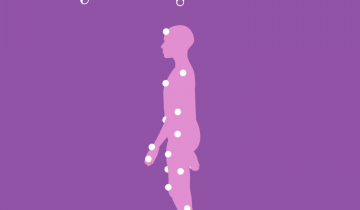
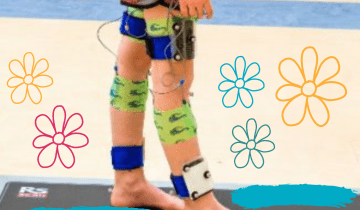
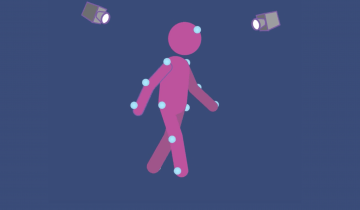
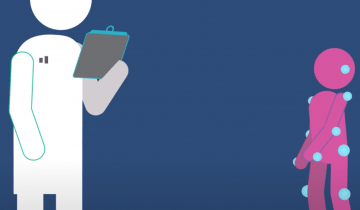
It's really hard just to watch someone walk to decide what's wrong with them. A better way is to do what's called Three Dimensional Gait Analysis, and that's where the child comes into one of our labs. Here, we put markers on their face, hands, and legs. We have a computer and a bunch of cameras all around the room. And then we're able to break down the gait into three dimensions.