MEVU was initially developed for children with cerebral palsy. It is now being tested with a wider group of parents and caregivers. You can help by taking the MEVU Survey today!
In LITTLE BEAR SEES you will learn: Exactly what CVI is What common characteristics to look for to determine if your child has CVI How the eyes and brain work together to facilitate vision Strategies and ideas for helping your child learn to see from the leading experts in cortical visual impairment
In this special episode from the AACPDM annual meeting, Belinda Deramore Denver talks about vision in CP and her current work to better understand how children use their vision to help intervene early and with the right interventions.
United Spinal Association has developed a comprehensive air travel guide for wheelchair users or anyone with mobility issues to assist with everything from traveling with your wheelchair to what to do if things break.
CP describes a spectrum of conditions that affects individuals in many different ways. Your care team may use the term GMFCS which stands for Gross Motor Function Classification Scale and is used to describe what mobility aids your child may need to complete certain tasks.
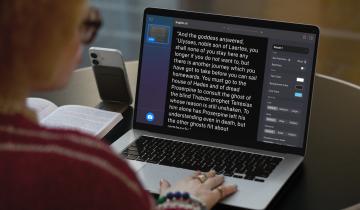
Technology for people with disabilities is advancing at an unprecedented pace, with artificial intelligence (AI), machine learning, and mainstream tech giants leading the way in accessibility innovation. Here’s a look at the most exciting developments, highlighting recent announcements from Apple, Microsoft, and the growing impact of AI-based solutions.
In this new series within Cerebral Palsy Health, Jen sits down with Nathalie Maitre, MD, PhD to talk about parenting, our shared experiences raising sons with CP and more!
This recent study found that over half of children and young people with Cerebral Palsy have more than one movement disorder, which is more common than previously thought.
Neurologist and movement disorder specialist, Heather Riordan, MD, describes the Chorea in Cerebral Palsy and what to do if it is impacting your function.
This presentation from the 2023 AACPDM Community Forum presents and overview of the interactions between the types of Cerebral Palsy, Mental and Behavioral Health and various medications and strategies to treat challenging mental health disturbances.
Creating opportunities that enable play in order to combat social isolation, foster inclusive communities, and improve the quality of life for people with disabilities.
Cephable is a free software for individuals that adapts to the user, enabling technology control through voice, face, and motion for a more accessible digital experience.
The Research Works podcast is designed for health professionals in the area of child health, where we discuss emerging, modern, evidence based research.
Do you or your child have movements that are difficult to control? Is your mobility and function impacted by abnormal movements or do these movements cause pain? If so, you or your child may have Dyskinesia. If you want to learn more, including how it is treated, don't miss this educational Town Hall with experts Dr. Heather Riordan, from Kennedy Krieger Institute, and Dr. Michael Kruer, from Phoenix Children's.