Search
64 results found
Narrow Results

Contributor

Understanding children with cerebral palsy and bullying: A mixed methods approach
Almost all of us can vividly conjure up an episode of being bullied that occurred in our own lives. Hopefully, fewer of us will have memories of being the bully. These experiences and remembrances often are formative, perceived as hurtful, and can have a long term impact on our health and well-being. For me the memory of being the center of attention in a negative way never quite fades, but with age, the perspective changes to a challenge.
Icon of microscope against documents against gray background
Episode 4: Cerebral Palsy Health. Iona Novak, PhD and Madison Paton, PhD: What's the Deal with Stem Cells Anyway?
On this episode I talk with two of the world’s leading researchers… Dr. Madison Paton and Dr. Iona Novak on stem cell treatment for cerebral palsy. Stem Cells have been a hot topic in Cerebral Palsy for at least 15 years now, with many parents and researchers hoping that at the least, stem cells will lessen the impact of CP and at most hold the key to a cure. Dr. Paton and Dr. Novak will share their insider knowledge into this subject and help us sort through the hype and so we can hold onto our hope.
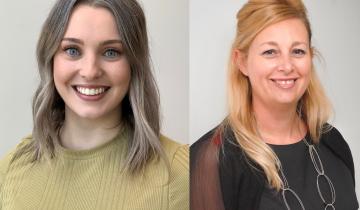
Photo of Madison Paton wearing a yellow sweater and Iona Novak wearing a black shirt on a grey background
New Horizons Virtual Town Hall 1- Weinberg Family Cerebral Palsy Center at Columbia University
Our educational series kicked off with a panel of experts from the Weinberg Family CP Center at Columbia University Irving Medical Center in New York City on Thursday, November 5th, 2020 at 6:30pm ET. This virtual event featured a multi-disciplinary panel discussion with Weinberg Family CP Center clinicians and researchers.
Blue crown symbol in the upper left corner next to the word Columbia Weinberg Family Cerebral Palsy Center
State of the Evidence Traffic Lights 2019
Purpose of review: Cerebral palsy is the most common physical disability of childhood, but the rate is falling, and severity is lessening. We conducted a systematic overview of best available evidence (2012-2019), appraising evidence using GRADE and the Evidence Alert Traffic Light System and then aggregated the new findings with our previous 2013 findings. This article summarizes the best available evidence interventions for preventing and managing cerebral palsy in 2019.
Icon of microscope against documents against gray background
Episode 3. Let’s Talk CP. Pediatric Orthopedic Surgeon Dr. Hank Chambers Shares Advice & More for Parents of Kids with Cerebral Palsy
Wondering what to expect if your child has an appointment with a pediatric orthopedic surgeon? Still confused about the different types and levels of cerebral palsy? Dr. Hank Chambers, who is also the father of an adult son with CP, talks about different considerations for different ages and stages of a child with cerebral palsy.
Photo of Dr. Hank Chambers wearing a black sport jacket and tie.
Episode 2. Let’s Talk CP. What Should You Expect at Your Child’s Medical Appointment with Dr. Lisa Thornton
Preparing yourself and your child well for medical appointments means a better experience for everyone. Our “Let’s Talk CP” podcast series continues Cerebral Palsy Foundation host, Cynthia Frisina talking with Physiatrist Dr. Lisa Thornton about cerebral palsy, spasticity and what to expect at many kinds of medical appointments. Questions include what to expect when procedures like botulinum toxin injections are recommended, how to talk with a clinician when “little ears” are listening, and much more. This episode is made possible with the support of Ipsen Biopharmaceuticals.
Photo of Dr. Lisa Thornton smiling at the camera wearing a red top
CP: The Early Years
Around the age of six all children are going off to school. Children move from explorative play, which is fairly informal to a much more formal day. That can be a lengthy day and it's quite structured. There are a lot of challenges faced by children with cerebral palsy throughout the school year.
A screenshot from the YouTube video, "The Early Years"
Mastery Motivation
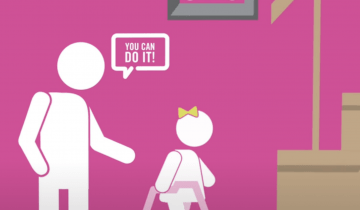
There are a couple of key things to think about in helping children and adolescents make the transition into young adulthood and independence. One of those things is called mastery motivation and we can see mastery motivation early in life. It's the ability to persist in the face of challenge. If you're growing up with a disability, it can be harder to do things. If you are not challenged, if the environment is not set up correctly, or if you don't have the resources, then you start to feel that you can't master certain kinds of tasks.
Representation of a parent cheering on their child with a text bubble above them that reads "You can do it!", while the child who uses a walker prepares to go up the stairs
Accessing the Classroom
In order to get a good education, children need to access the curriculum. That's at the heart of their education. Some of the key challenges of getting students both their education and access to their voice in the class is simply understanding. Preparation for the student with disabilities is key. We have to foster success. We have to build a sense of success in the beginning. That starts with understanding the abilities of that student.
A screenshot from the YouTube video, "Accessing the Classroom"
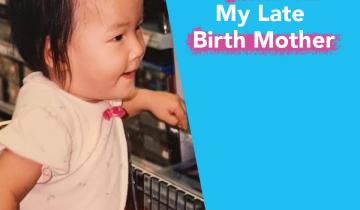
How I’ve Learned to Celebrate My Late Birth Mother
Saturdays were special as a kid growing up in Port Washington, New York. Saturdays meant Burger King outings with my grandparents, a great big slice of trade-marked Hershey’s chocolate pie for me and piping hot oatmeal for them. And we can’t forget about the Kids Meal toys. But on this particular Saturday, everything was different - at the tender age of five, I started to notice that certain aspects of my life were just off.
"How I’ve Learned to Celebrate My Late Birth Mother" written in text to the right of an image or writer, Sarah Kim, as a child
Friendships in the Time of COVID-19
I don’t know if this is just me, but my time in quarantine has made me have weird flashbacks to my childhood. As a kid growing up with CP, especially with a speech impediment and mobility limitations, my lifeline to making and keeping friends was through AIM (AOL Instant Messenger, for those of you who are too young to remember) and one of the first video chatting platforms, ooVoo. Fast forward 15 years, many of us are in a similar situation. To slow the spread of COVID-19, most of life has moved online, including friendships.
"Friendships in the Time of COVID-19" written in text below an image of writer Sarah Kim
Growing Up in the 90s & 00s with Cerebral Palsy
As I progress in my career as a journalist and writer, the more attention and followers I receive on social media. Every so often, I receive a direct message or email from young readers, explaining how I’ve become a role model for them. They express the inspiration they gain from witnessing me not allowing my cerebral palsy get in the way of following my dreams. It was then that I realized I am now the role model that I desperately needed when I was a young girl.
"Growing Up in the 90's and 00's with Cerebral Palsy" shown in text surrounded by images of 90's reminiscent items such as roller skates, a boombox, and a gameboy, all against a green background.
What is Spasticity?
Spasticity is a condition of muscles that is a velocity resistance to stretch. What that means to a child and to a parent is that if you move the limb slowly, you have a difference than if you move that limb fast. Spasticity restricts movement and it creates a break on the system. It's as if they're trying to move, but they're held back. By treating spasticity, you may improve the range of motion or the action of the movement.
Photo of Dr. Deborah Gaebler Spira
Supporting Reading for a Child who is Non-Verbal
I'm going to be talking about AAC and reading and some different things that you might not think about when you are doing those types of activities. When you're supporting reading for a nonverbal child, whether they use a high-tech system or a light-tech system, like a paperboard, you want to make sure that they have plenty of the opportunities to contribute to the experience. You want to be able to comment. You want to be able to talk about the people, the places, the things, and maybe the feelings that they have.
Photo of Pati King Debaun with words that say Get the child engaged in reading with you