In LITTLE BEAR SEES you will learn: Exactly what CVI is What common characteristics to look for to determine if your child has CVI How the eyes and brain work together to facilitate vision Strategies and ideas for helping your child learn to see from the leading experts in cortical visual impairment
United Spinal Association has developed a comprehensive air travel guide for wheelchair users or anyone with mobility issues to assist with everything from traveling with your wheelchair to what to do if things break.
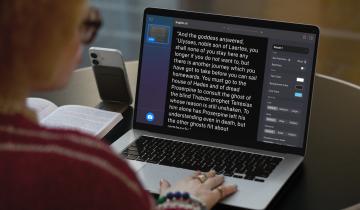
Technology for people with disabilities is advancing at an unprecedented pace, with artificial intelligence (AI), machine learning, and mainstream tech giants leading the way in accessibility innovation. Here’s a look at the most exciting developments, highlighting recent announcements from Apple, Microsoft, and the growing impact of AI-based solutions.
Chris achieved and accomplished things that nobody thought were attainable. He persevered through cerebral palsy and learned that God had a purpose for him.
Written for fifth and sixth graders, this is the third in a series about Melody, now a teenager with cerebral palsy who utilizes a communication device to interact and participate. She is on her way to London!
Misty Campbell is parent of child with complex disabilities who wrote this book as a guide for other families to advocate for their own children with significant disabilities.
Creating opportunities that enable play in order to combat social isolation, foster inclusive communities, and improve the quality of life for people with disabilities.
Cephable is a free software for individuals that adapts to the user, enabling technology control through voice, face, and motion for a more accessible digital experience.
Founded by Susan Banks and Courtney Craven, Can I Play that? (CIPT) has grown from a hobby site to a destination for gamers and developers alike that provides all forms of accessibility information on video games and the industry.
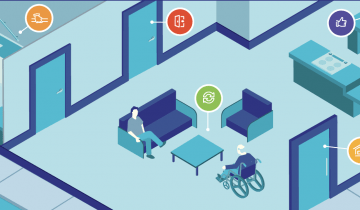
Assistive technology comes in all shapes and sizes to help adapt your environment to best meet your needs. From tools to help you turn on the lights to high tech games to help you participate with your peers, AT can equalize the playing field!
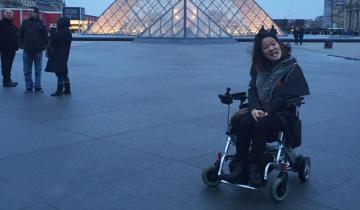
Welcome to the second part of my travel series! In the previous post, I wrote about how I found my love for traveling through my trip to Madrid and Paris. Looking back, not only do I realize that these trips took place during very different phases of my adult life, but they also mark the different phases of my CP in recent years. Although CP is the result of a non-progressive brain injury, many folks experience a decline in their physical abilities in their adult years — the inevitable effect of aging, not just for those with disabilities, but for everyone.
In the next couple of blog posts, I’ll write about some of my favorite trips that I took over the years. I’ll travel down memory lane of all the new places I explored in recent years and eagerly wait until my next trip.
My cousin, Reeva, had recently moved to Kyoto, Japan to learn Japanese for a year, and she convinced me to visit her there. I didn’t know anyone else living in Japan and Reeva was going to be there short term, so I couldn’t possibly pass up going! I was admittedly pretty nervous about traveling all the way across the world— a 24-hour long plane trip, including a layover— especially to a country that uses a language that isn’t remotely like anything I was used to. But, again, I wasn’t going to miss this once-in-a-lifetime opportunity.