Making informed decisions about care and treatment for cerebral palsy (CP) can be overwhelming, especially with the vast amount of medical research available. Through this guide, we aim to help you better understand the types of research you may encounter and provides practical tips for evaluating studies relevant to CP.

Dental Professors, Dr. Erica Caffrey, DDS and Dr. Sydnee Chavis, DMD, MS discuss oral health and dentistry across the lifespan.
In Episode 4 of Coffee Talk, Nathalie and Jen discuss research and clinical trials.
CPF Executive Director Rachel Byrne and Chris Modlesky, PhD discuss exercise, fitness, research, research funding and his current research.
CPF Executive Director Rachel Byrne and Jocelyn Cohen, Vice President of Communications and Engagement at Cerebral Palsy Alliance Research Foundation discuss collaboration in research.
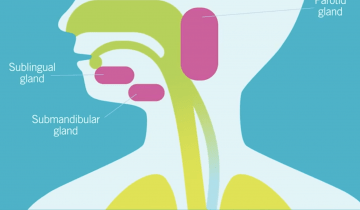
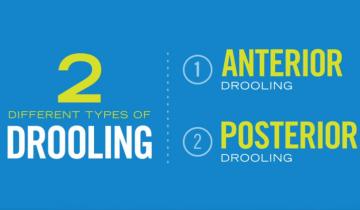
Drooling is an important problem for many individuals with CP and there are a number of interventions available to treat symptoms. If an individual with CP or their caregiver have concerns about drooling it is important to discuss with a health care provider. Care pathways such as the AACPDM pathway can be a starting point for shared decision making. In all cases, working together as a team is important in choosing the best alternative. Children and adults with CP may have trouble with drooling, or saliva management. In the medical world, drooling is referred to as sialorrhea. Saliva plays an important role in eating but also can interfere with airway clearance and breathing, as well as social participation. When drooling has this kind of impact it becomes important to consider intervention.
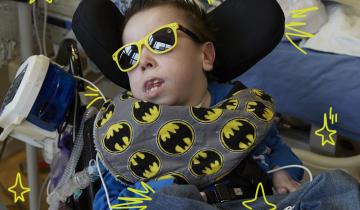
Many children with cerebral palsy (CP) have difficulty controlling saliva. Drooling varies in severity and can be distressing for the children, families and caregivers. Chronic drooling is referred to as Sialorrhea and occurs as a result of limitations in a person’s ability to control and swallow oral secretions.
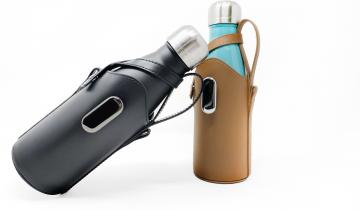
Compatible with the FFORA Attachment (an attachment that affixes to the tubing of manual wheelchairs) behold the New FFORA Bottle Holder & FFORA Bottle, allowing you to carry your H2O or favorite beverage in style!
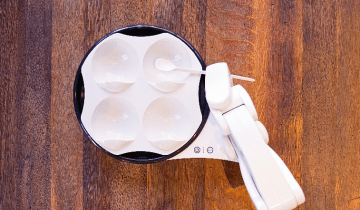
Obi is a first of its kind, revolutionary dining device for individuals who lack upper extremity function. With the momentary touch of a switch, Obi allows users to select between four compartments of food and to command when the food is captured and delivered to the mouth. Obi increases independence, social interaction, and effective food capturing like never before.
The Zumo Learning System provides an accessible learning environment for children of all abilities and helps children fall in love with STEM concepts through play!
Enjoy the great outdoors while staying warm and cozy with a custom KoolKape from Koolway Sports.
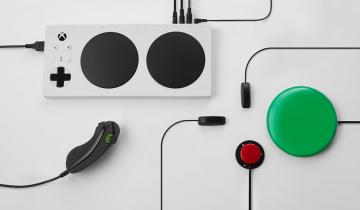
Xbox One’s new copilot feature allows two users to share one controller by combining the input from two controllers, so that two people can play as one. “Now folks with disabilities who need someone else to handle certain actions can turn what would be a cumbersome task into a co-op experience of sorts, ” explained Scott Henson from the Xbox engineering team.
The Xbox Adaptive Controller (XAC) is a first-of-its-kind device designed to allow people with a wide range of physical abilities to access game commands and play video games alone – and with friends. The physical access XAC provides isn’t something everyone needs. But anyone who does need it can now have it. What a change!