Cerebral palsy refers to a group of conditions that are caused by problems in brain development and that affect how movement and motor control happen in children. Problems with walking and talking are often the way people start a conversation about cerebral palsy.
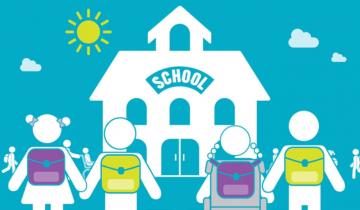
Around the age of six all children are going off to school. Children move from explorative play, which is fairly informal to a much more formal day. That can be a lengthy day and it's quite structured. There are a lot of challenges faced by children with cerebral palsy throughout the school year.
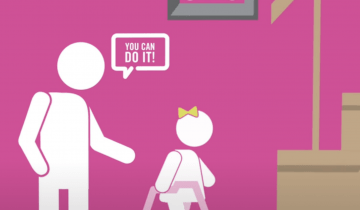
There are a couple of key things to think about in helping children and adolescents make the transition into young adulthood and independence. One of those things is called mastery motivation and we can see mastery motivation early in life. It's the ability to persist in the face of challenge. If you're growing up with a disability, it can be harder to do things. If you are not challenged, if the environment is not set up correctly, or if you don't have the resources, then you start to feel that you can't master certain kinds of tasks.
In order to get a good education, children need to access the curriculum. That's at the heart of their education. Some of the key challenges of getting students both their education and access to their voice in the class is simply understanding. Preparation for the student with disabilities is key. We have to foster success. We have to build a sense of success in the beginning. That starts with understanding the abilities of that student.
Saturdays were special as a kid growing up in Port Washington, New York. Saturdays meant Burger King outings with my grandparents, a great big slice of trade-marked Hershey’s chocolate pie for me and piping hot oatmeal for them. And we can’t forget about the Kids Meal toys. But on this particular Saturday, everything was different - at the tender age of five, I started to notice that certain aspects of my life were just off.
I don’t know if this is just me, but my time in quarantine has made me have weird flashbacks to my childhood. As a kid growing up with CP, especially with a speech impediment and mobility limitations, my lifeline to making and keeping friends was through AIM (AOL Instant Messenger, for those of you who are too young to remember) and one of the first video chatting platforms, ooVoo. Fast forward 15 years, many of us are in a similar situation. To slow the spread of COVID-19, most of life has moved online, including friendships.
If you’re a history nerd like me, then you probably wondered about the origin of cerebral palsy at least once in your life. As an ever-inquisitive kid, that was certainly at the forefront of my mind, especially when I was old enough to truly comprehend that I had CP.
For some the day-to-day problems faced by children and adults with cerebral palsy, and their carers, are not motor ones alone. It is important that you discuss other areas of your child's development if you have concerns.
As I progress in my career as a journalist and writer, the more attention and followers I receive on social media. Every so often, I receive a direct message or email from young readers, explaining how I’ve become a role model for them. They express the inspiration they gain from witnessing me not allowing my cerebral palsy get in the way of following my dreams. It was then that I realized I am now the role model that I desperately needed when I was a young girl.
I'm going to be talking about AAC and reading and some different things that you might not think about when you are doing those types of activities. When you're supporting reading for a nonverbal child, whether they use a high-tech system or a light-tech system, like a paperboard, you want to make sure that they have plenty of the opportunities to contribute to the experience. You want to be able to comment. You want to be able to talk about the people, the places, the things, and maybe the feelings that they have.
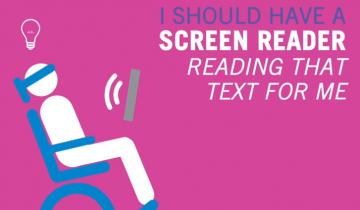
Every educator needs to make a decision about technology they need to put in place. They're not sure if they should put Option A in place or Option B in place. This can be particularly difficult in the world of disabilities because there might not always be a perfect answer. Teachers can look to this solution, using the least dangerous assumption to make good decisions about what technology might be best.
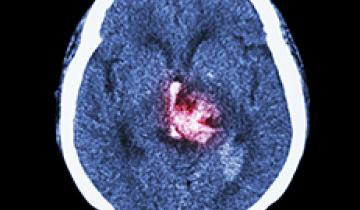
It is important to understand the brain injury for each individual person, because they can be really different. Where the injury is can give us important clues to what motor problems that individual will have. The time you have the biggest risk to having a stroke is as a baby, not as an adult so it is important to understand what may be happening in the infants brain.
Everybody tells stories, and that includes people who use communication systems. To ensure success and the ability to participate we need to make it as easy as possible. So that we can tell stories whenever we want, wherever we want, to whomever we want, and in a really easy way, so we can be successful.
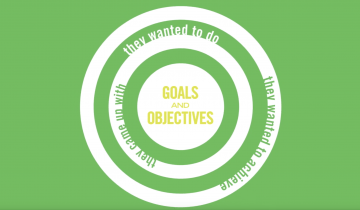
When you're looking at setting goals for kids with complex communication needs, don't forget about setting goals that are about them interacting in the classroom. It's not just about punching buttons. It's not just about saying vocabulary words. It's about talking with people and showing who you are. Some specific goals that you can look at are in four areas. Educational goals, social goals, inclusion goals, and goals and independence.
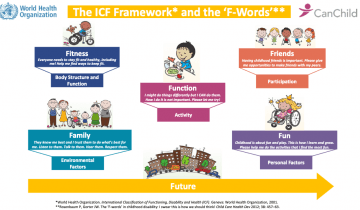
The World Health Organization has developed the ‘International Classification of Function’. This gives us a way to think about any health condition. Here we can see many ideas that we need to think about with CP. We can also see how these many ideas are connected to one another.
There are some medical conditions or events that can happen during pregnancy, delivery, or shortly thereafter that may increase a baby's risk of being born with cerebral palsy.
Cerebral Palsy affects body movement, muscle control, muscle coordination, muscle tone, reflex, posture and balance. Depending on the part of the brain that is injured depends on how someone’s muscle tone will be effected. For people with spastic CP they have increased muscle tone because of the part of the brain that's injured. If causes very tight muscles which in turn effects the movement of the joints and of the limbs. For others who have dyskinetic CP they lose the ability to have voluntary control over their muscles, and they can have jerky and uncontrolled movement patterns.
Infants with CP frequently have developmental and motor delays, in which they are slow to reach milestones such as learning to roll over, sit, crawl, or walk. The symptoms of CP differ in type and severity from one person to the next, and may even change in an individual over time.
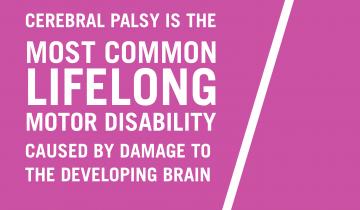
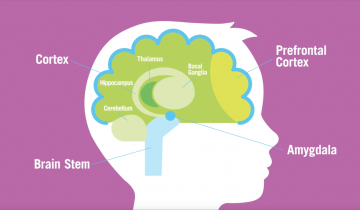
Cerebral Palsy is the most common motor disability in children caused by abnormal development or damage to the motor area of the brain’s outer layer (called the cerebral cortex), the part of the brain that directs muscle movement. This damage can occur before, during, or shortly after birth.