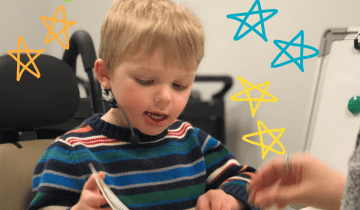
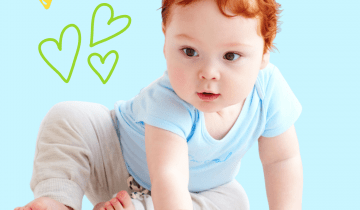
Researchers are looking for babies with motor delays and their families to participate in an NIH funded research project to evaluate possible benefits of two interventions for babies targeting sitting and reaching. Does your child qualify? Find out now!
The bipartisan, Cerebral Palsy Research Act, is introduced by Congressman Steve Cohen of Tennessee. Read more here:

Dr. Tom Novacheck, of Gillette Children's, describes the characteristics of the 4 types of unilateral, otherwise known as hemiplegic gait, and how the use of clinical instrumented gait analysis can help with treatment decision making.
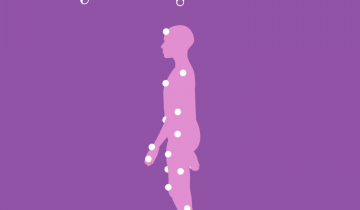
Dr. Tom Novacheck, Gillette Children's, describes what to look for in each of the 4 different gait patterns seen for those with bilateral cerebral palsy and considerations for each type.
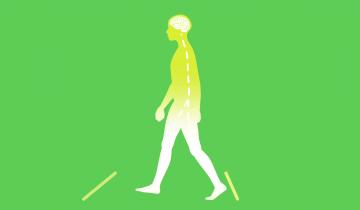
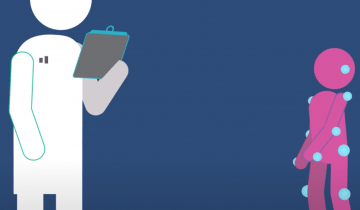
My name is Tom Novacheck. I'm a pediatric orthopedic surgeon at Gillette children's specialty healthcare in St. Paul Minnesota. I'm associate medical director at the hospital and professor of orthopedics at the university of Minnesota. Cerebral palsy affects gait first and foremost because remember cerebral is a neurological condition and as such, it affects the brain. And we know that the brain
My name is Tom Novacheck I'm a pediatric orthopedic surgeon at Gillette Children's Specialty Healthcare in St. Paul, Minnesota. I'm associate medical director at the hospital and professor of Orthopedics at the University of Minnesota. Cerebral palsy is a neurological condition, and as such, it affects the brain and we know that the brain is the main controller of movement and walking. In addition
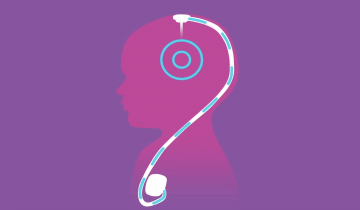
Hi, I'm Debbie Song. I'm a pediatric neurosurgeon at Gillette Children's Specialty Healthcare. Today, I'm going to be giving an overview of some of the neurosurgical interventions that can be done to address global tone in patients with cerebral palsy. Some of the common neurosurgical procedures that are done for patients with cerebral palsy include shunt surgery to treat hydrocephalus,
Dr. Debbie Song, Gillette Children's, gives an overview of common neurosurgical procedures to address global tone in individuals with cerebral palsy.

In cerebral palsy (CP) muscles are often shortened so much that they restrict joint range of motion and the muscles themselves are weak. Thus, ‘shortness’ and ‘weakness’ are two important needs that clinicians must address.
We studied how common pain was thought to be due to muscle spasticity in the legs or arms is in children/adolescents with CP.
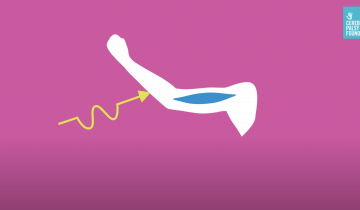
It is important to understand how spasticity can impact the muscles and the know what treatments are available to help.
The Dyskinetic Cerebral Palsy Functional Impact Scale is a new tool useful measuring the functional impact of dyskinesia on children's movements and postures and the perceived impact of dyskinesia on daily activities. It can can help identify priorities for intervention.
This systematic review looks at all available evidence for pharmacological/neurosurgical interventions for managing dystonia in individuals with cerebral palsy to inform the AACPDM care pathway.
The 2023 Appropriations Act has passed and thanks to advocacy by the cerebral palsy community, it includes the strongest language and funding yet for cerebral palsy!
Hypotonic CP, also known as hypotonia, is a form of cerebral palsy that causes low muscle tone. In other words, the muscles are overly relaxed and your child may feel floppy.
Mixed types of CP refer to symptoms that don’t correspond to any single type of CP but are a mix of types. For example, a child with mixed CP may have some muscles that are too tight and others that are too relaxed.
Ataxia affects balance and depth perception. Children with ataxia will often have poor coordination and walk unsteadily with a wide-based gait.
Understanding different gait patterns is important because it can determine what interventions will potentially be the most effective.
Our goal is to understand how speech movements of young children with speech delays or disorders differ from kids with typical speech development, in order to improve assessment and treatment of childhood speech disorders.