Making informed decisions about care and treatment for cerebral palsy (CP) can be overwhelming, especially with the vast amount of medical research available. Through this guide, we aim to help you better understand the types of research you may encounter and provides practical tips for evaluating studies relevant to CP.
Whether you are a caregiver or an individual with CP, the decision to pursue a treatment or therapy can be daunting. Use this guide to help you sort through the hype and determine what might help.
In Episode 5 of Coffee Talk, Nathalie and Jen discuss preventive care and vaccines.
Dental Professors, Dr. Erica Caffrey, DDS and Dr. Sydnee Chavis, DMD, MS discuss oral health and dentistry across the lifespan.
In Episode 4 of Coffee Talk, Nathalie and Jen discuss research and clinical trials.
Dr. Golda Milo-Manson discusses common sleep issues and solutions in cerebral palsy.
In Episode 2 of Coffee Talk, Nathalie and Jen discuss their experiences with sleep as it has impacted their sons and their lives.
In this new series within Cerebral Palsy Health, Jen sits down with Nathalie Maitre, MD, PhD to talk about parenting, our shared experiences raising sons with CP and more!
Dr. Nathalie Maitre discusses the CPF Early Detection and Intervention Network and helps us to understand how babies learn, how CP impacts the developing brain, and early intervention strategies that can help.
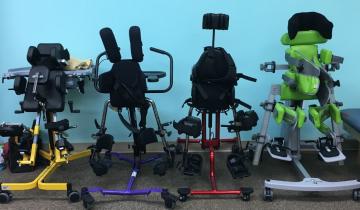
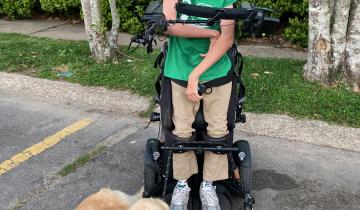
NCART Standing Device Funding Guide contains all the information needed to choose, measure, and write a letter of medical necessity for a standing device.
Standing devices and standing wheelchair devices are frequently prescribed and often denied equipment options for individuals with cerebral palsy. The attached paper provides evidence and guidance to help appeal to insurers for this equipment.
Complex Rehabilitation Technology serves to enhance the lives of individuals who utilize it with the goals of maximizing health, wellbeing, participation and independence.
RESNA (Rehab Engineering and Assistive Technology Society of North America) is a great place to find highly qualified rehab and assistive technology professionals in your area. They also have provided their research to help providers and the families they serve make decisions about powered mobility for young children.
Jen Lyman provides a parent perspective on powered wheelchair standing devices as it relates to Dr. Lisa Kenyon's research article.
The Cerebral Palsy Foundation has created a checklist to help guide you in living the healthiest life possible. This checklist has been created for adults with cerebral palsy to provide basic guidance surrounding routine and additional screenings that should occur as part of your primary and preventive care.
Individuals with disabilities have opportunities to work, receive employment training and coaching, benefits counseling and save money without losing means tested benefits. This podcast discusses these options.
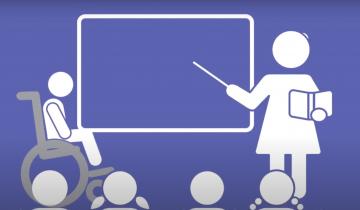
Students with disabilities often need extra support throughout the day to access their environment, the academic materials, and learn alongside their peers. A Personal Care Attendant in the school setting is often utilized to support the students needs.
Children and teens with cerebral palsy and other disabilities may need the assistance of an individual who has a background in healthcare and the skills to provide the services essential to quality care.
An employment agreement spells out the rules, rights and responsibilities for both the Personal Care Attendant (the employee) and the individual with cerebral palsy or family who is hiring the Personal Care Attendant.
On this episode, I have the honor of talking with Wendy Pierce, MD, a pediatric physiatrist at Colorado Children's Hospital about physiatry, also known as Physical Medicine and Rehabilitation. This fantastic field of medicine can be helpful for individuals with cerebral palsy across with lifespan, but it has a confusing name and sometimes a confusing job description. So we set out to help listeners better understand what a physiatrist does.
On this episode I talk with two of the world’s leading researchers… Dr. Madison Paton and Dr. Iona Novak on stem cell treatment for cerebral palsy. Stem Cells have been a hot topic in Cerebral Palsy for at least 15 years now, with many parents and researchers hoping that at the least, stem cells will lessen the impact of CP and at most hold the key to a cure. Dr. Paton and Dr. Novak will share their insider knowledge into this subject and help us sort through the hype and so we can hold onto our hope.
On this episode with Dr. Amy Bailes, we discuss the Gross Motor Functional Classification System (the GMFCS), the Gross Motor Functional Measure (the GMFM), and the corresponding motor curves. The GMFCS is an important classification system that is relatively easy to understand and it helps create a shared language and framework for understanding a person with CP’s physical function. This can be very helpful for patients, families and providers of all sorts, especially as it relates to both and acceptance and understanding of the diagnosis and family-centered shared decision making.
In this first episode, listeners will meet the host, Jen, learn about her background, her son, Bower, and the reason for creating this podcast. Enjoy!
This podcast is a place for conversations with experts about issues related to cerebral palsy that affect health, fitness, function and participation. We will cover a range of topics including: treatments and therapies, nutrition, neuroplasticity, genetics, exercise and fitness, adaptive sports, accessibility, and new trends.