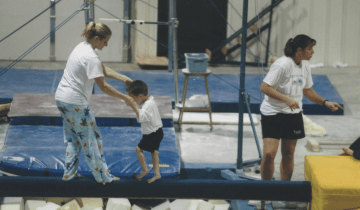

This research studied falls in ambulatory children and adults with CP specifically asking how often they’ve fallen, fall-related injuries experienced, circumstances around the fall, the level of fear or concern about future falls, and the extent to which they do or don’t avoid certain activities due to their concern about falling. This study sets a strong foundation for future fall research, quantifying the breadth and depth of the problem across a large spectrum of age and walking ability.

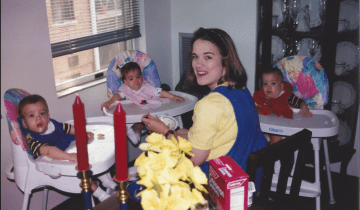
The hardest part of raising two children with Cerebral Palsy is the fact that we live in a world that refuses to adapt to anything beyond ordinary. And I have always -- always -- known that Benjamin and Mason were far beyond ordinary.
A parent's perspective as she recalls the moment she realized that a wheelchair meant freedom for her son and not a barrier to his progress.
My boys were exactly the same amazing, lovable, adorable, brilliant little boys after the diagnosis, that they had been before it. The exact same.
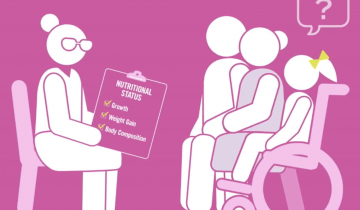
Weight, height and body composition are important indicators for development. The tools used to measure these can be different for children with cerebral palsy.
Children with cerebral palsy (CP) often grow poorly and assessment of growth in this population is further complicated by two main difficulties. Firstly, children may have joint contractures, muscular weakness, scoliosis, and/or involuntary movements that make standing or lying straight difficult, if not impossible.