CPF Executive Director Rachel Byrne and Peter Rosenbaum, MD, developmental pediatrician and CPF Scientific Advisory Council member discuss how current thinking about Cerebral Palsy has changed over time with advances in research.
Understanding and managing healthcare and the healthcare system can be daunting for all of us. Attitudes of both providers and patients toward healthcare have experienced significant changes over the past few decades, shifting away from a focus on providers addressing problems as they arise, to more of a partnership and a shared decision-making process to maximize function, well-being, and reduce potential morbidities [1].
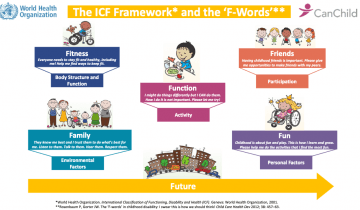
The World Health Organization has developed the ‘International Classification of Function’. This gives us a way to think about any health condition. Here we can see many ideas that we need to think about with CP. We can also see how these many ideas are connected to one another.
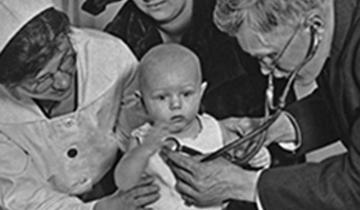
Over the past 70 years the Cerebral Palsy Foundation (CPF) has grown into the largest non-government funder of cerebral palsy research in the United States. This was achieved through the work of the most renowned thinkers in science, research and medicine. But it was first imagined by dedicated, visionary parents who wanted to make a difference.