Communication isn't just about building words. It's about making an effort so that the student has that self-confidence to be a good communicator, so that we have that one-on-one partnership of communication.
Every educator needs to make a decision about technology they need to put in place. They're not sure if they should put Option A in place or Option B in place. This can be particularly difficult in the world of disabilities because there might not always be a perfect answer. Teachers can look to this solution, using the least dangerous assumption to make good decisions about what technology might be best.
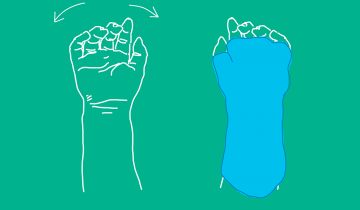
Upper limb therapies and interventions have been well studied in cerebral palsy. Different interventions that have good evidence are Constraint Induced Movement Therapy (CIMT) and Bimanual Therapy. CIMT has been shown to be successful in children with hemiplegic cerebral palsy (CP). CIMT uses a splint to physically constrain the uninvolved arm and encourage them to use the more involved or affected arm.