This research studied falls in ambulatory children and adults with CP specifically asking how often they’ve fallen, fall-related injuries experienced, circumstances around the fall, the level of fear or concern about future falls, and the extent to which they do or don’t avoid certain activities due to their concern about falling. This study sets a strong foundation for future fall research, quantifying the breadth and depth of the problem across a large spectrum of age and walking ability.

The second Virtual Town Hall featured the experts from Rady Children's Hospital, Southern Family CP Center, and UC San Diego School of Medicine in San Diego, California. This multi-disciplinary panel discussion highlights the latest updates in care of children with CerebralPalsy.
Children with cerebral palsy have more complex self-management and self-care demands than children who are typically developing. They have to learn how to deal with medications and they may have to deal with medical equipment. At some point, they're going to have to learn about medical appointments.
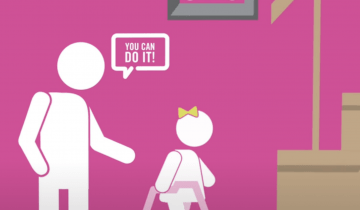
There are a couple of key things to think about in helping children and adolescents make the transition into young adulthood and independence. One of those things is called mastery motivation and we can see mastery motivation early in life. It's the ability to persist in the face of challenge. If you're growing up with a disability, it can be harder to do things. If you are not challenged, if the environment is not set up correctly, or if you don't have the resources, then you start to feel that you can't master certain kinds of tasks.
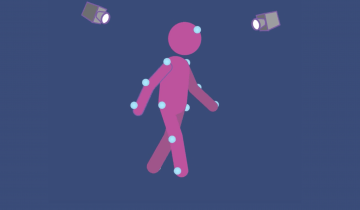
It's really hard just to watch someone walk to decide what's wrong with them. A better way is to do what's called Three Dimensional Gait Analysis, and that's where the child comes into one of our labs. Here, we put markers on their face, hands, and legs. We have a computer and a bunch of cameras all around the room. And then we're able to break down the gait into three dimensions.
As an orthopedic surgeon I take care of children from the time they're born all the way through to adulthood . My oldest patient I have is 87 years old. As part of my practice I'm able to take care of all of their musculoskeletal problems, their problems with their bones and their joints.